Understanding the NEET Phenomenon
NEETs, defined as youth lacking employment, education, or training, often feel alienated. The guide portrays how such isolation can spark a yearning for escape, leading protagonists like Masamune to a parallel realm where mischief inversion extreme grants healing power, reshaping identity. for future and hope!

The Concept of Parallel Worlds in Modern Fiction
Modern fantasy frequently employs the trope of alternate realities, offering protagonists a chance to escape mundane existence. In the NEETs guide narrative, the protagonist’s transition to a new world is triggered by a mischief inversion extreme skill, a device that flips conventional healing into a powerful countermeasure. This inversion mirrors the thematic shift from isolation to empowerment, a common thread in contemporary speculative works. Parallel realms are often constructed with layered lore: a governing council, mysterious tribes, and looming magical threats such as the Encroachment Wave. By situating a NEET character within such a setting, authors explore the psychological impact of sudden status change, from social alienation to heroic responsibility. The narrative also reflects on how these worlds serve as mirrors, allowing readers to examine their own disconnections and the possibility of transformation through skill acquisition and alliance building.
Parallel worlds serve as psychological laboratories where reality’s rules bend, allowing characters to grow rapidly. In the NEETs guide, the protagonist’s healing skill becomes a mirror of inner resilience, demanding empathy toward allies like the White Cat Tribe and demon companions. Through these bonds, isolation transforms into collective strength, showing that alternate realities can redefine identity and purpose. This journey shows how NEET can turn isolation into collective power, reshaping destiny within world of limitless possibilities.!!!
The Protagonist Masamune: From NEET to Healer
Masamune, a typical NEET, spends days before screens, detached from society. His life shifts when a mysterious skill—mischief inversion extreme—grants him the power to heal by inverting harmful magic. This ability, coupled with the Encroachment Wave, pushes him into a realm where he must master his gift. He meets allies:and advisers who steer him through intrigue. As he trains, Masamune’s confidence rises, turning from a passive observer into an active participant in the realm’s fate. His story shows how a NEET can redefine identity, using new powers to heal others and challenge rulers. The narrative stresses resilience, community, and growth when one embraces change. His determination fuels his quest, turning every setback into a lesson! His resolve inspires allies, turning hope into action now!
Masamune, a typical NEET, spends days before screens, detached from society. His life shifts when a mysterious skill—mischief inversion extreme—grants him the power to heal by inverting harmful magic. This ability, coupled with the Encroachment Wave, pushes him into a realm where he must master his gift. He meets allies:and advisers who steer him through intrigue. As he trains, Masamune’s confidence rises, turning from a passive observer into an active participant in the realm’s fate. His story shows how a NEET can redefine identity, using new powers to heal others and challenge rulers. The narrative stresses resilience, community, and growth when one embraces change. His determination fuels his quest, turning every setback into a lesson!
Masamune, a NEET trapped in a cycle of inactivity, longs for a fresh start. The guide chronicles his sudden awakening when he acquires the mischief inversion extreme skill, a rare power that turns harmful magic into healing. This skill, coupled with the ominous Encroachment Wave, catapults him into a parallel realm where he must master new abilities. He encounters the white cat tribe and demon allies, forming bonds that help him navigate this world’s complex politics. As he hones his healing prowess, Masamune learns to balance offensive and defensive tactics, manage resources, and collaborate with allies. The narrative emphasizes that each skill has prerequisites, cooldowns, and synergy potentials, encouraging strategic progression. By integrating these mechanics, Masamune transforms from a NEET to a formidable healer, turning personal stagnation into an active force for change. A NEETs Guide to the Parallel World: Healer, the Strongest Cheat? Novel ― Read A NEETs Guide to the Parallel World: Healer, the Strongest Cheat? Online For Free ‒ Novel Bin: After wondering the darkness, Masamune who received the skill mischief inversion extreme through inverting the healing magic gained the ominous magic Encroachment Wave. Now the strongest, Masamune swore his revenge. Demons and the white cat tribe, precious companions he met on his journey. Together they explore the new world. The guide also explains the tiered magic system, where basic, intermediate, and advanced levels unlock progressively stronger abilities. Masamune must complete quests that test his healing skill, unlocking higher-tier powers like the Encroachment Wave, which manipulates negative energy into protective barriers. Alliances with the white cat tribe provide unique buffs, while demon allies offer powerful yet risky support spells. Mastery of these core abilities is essential for surviving escalating threats and achieving his ultimate goal of revenge against those who once mocked him. Through perseverance and strategic use of his skills, Masamune ultimately reshapes his destiny, proving that even a NEET can become a legend in a world of magic.

Navigating Social Structures: Rulers, Advisers, and Companions
Masamune navigates a hierarchy where rulers wield power, advisers whisper counsel, and companions share quests. He earns favor by healing, uses Encroachment Wave to protect allies, and allies with the white cat tribe and demon allies. Strategic diplomacy unlocks new quests and power tiers to ascend ranks fast!!
Demographics and Statistics of NEET Populations

In the contemporary landscape, NEET (Not in Employment, Education, or Training) youth represent a segment. Recent surveys indicate that approximately 12% of the 15‑29 age cohort in Europe, 8% in North America, and 15% in parts of East Asia fall into this category. These figures are derived from longitudinal studies conducted by the OECD, UNESCO, and national statistical agencies, which track employment status, educational enrollment, and training participation over time.

Key variables include gender, socioeconomic background, and geographic location. Women constitute roughly 40% of the NEET population, a proportion that varies by region. Rural areas exhibit higher NEET rates, often exceeding 20%, due to limited job opportunities and educational infrastructure. Urban centers, while offering more options, also see elevated NEET figures where informal economies dominate.
Age distribution shows a concentration among 18‑24 year olds, with a gradual decline in the 25‑29 bracket. This trend reflects the transition phase from education to workforce, where many NEETs face barriers such as skill mismatches, mental health challenges, and lack of mentorship. Policy initiatives like job placement programs, vocational training subsidies, and mental health support aim to reduce NEET prevalence, fostering social mobility and economic resilience;
These stats fuel Masamune’s quest: escape stagnation, reshape society. In the new world, NEETs like him find purpose, proving data insight sparks transformative journeys for all!!
Societal Perceptions and Support Systems for NEETs
Public opinion on NEETs varies widely, ranging from empathy to stigma. In many societies, NEETs are seen as a sign of systemic failure, yet they are also perceived as a potential reservoir of untapped talent if given proper guidance. Media portrayals often oscillate between cautionary tales and inspirational narratives, influencing policy debates and community attitudes. Governments worldwide have responded with a mix of welfare programs, educational incentives, and vocational training initiatives aimed at reintegrating NEETs into productive roles. In Europe, the European Union’s Youth Employment Initiative allocates funds for apprenticeships, while in Japan, the “NEET Support Center” offers counseling and skill‑building workshops. These support systems emphasize mentorship, mental health resources, and flexible learning pathways, acknowledging that the journey from disengagement to engagement is multifaceted. Community‑based organizations also play a pivotal role by creating safe spaces for skill development, fostering peer networks, and advocating for inclusive employment practices. The success of these programs hinges on collaboration between public agencies, private sector partners, and civil society, ensuring that NEETs receive holistic support that addresses economic, psychological, and social dimensions. Ultimately, the evolving perception of NEETs—from marginalized to empowered—reflects a broader shift toward recognizing the value of diverse life trajectories in a dynamic workforce landscape.

- Job placement services that match NEETs with entry‑level roles.
- Scholarship programs targeting high‑school dropouts.
- Digital literacy bootcamps to bridge the tech gap.
- Peer‑mentoring circles to build confidence and networks.
- Health‑care subsidies addressing mental‑health challenges.
These programs aim to cut NEET rates by 4% within five years for sustainable growth now.!!
Historical Roots of Parallel World Narratives
From ancient myths to modern manga, the concept of alternate realms has long fascinated humanity. Early folklore such as the Norse Ragnarok and the Greek Underworld presented worlds beyond mortal reach, while medieval literature introduced portals in tales like Doctor Faustus and Gulliver’s Travels. The 20th century saw a surge in speculative fiction: H.P. Lovecraft’s cosmic horrors, C.S. Lewis’s Chronicles of Narnia, and Jorge Luis Borges’s labyrinthine Ficciones explored liminal spaces. Post‑war science fiction further expanded the motif, with works such as Brave New World and Neuromancer questioning reality itself. The rise of role‑playing games in the 1970s and 1980s, notably Dungeons & Dragons, institutionalized the idea of multiverses, allowing players to traverse countless dimensions. In contemporary times, light novels and webcomics have popularized the “isekai” trope, where protagonists, often ordinary or marginalized, are transported to fantastical worlds. This narrative device reflects societal desires for escape and empowerment, resonating with audiences who feel constrained in their own realities. The evolution of parallel world stories mirrors technological progress, shifting from oral storytelling to digital platforms, thereby broadening accessibility and interactivity. Today’s adaptations blend traditional mythic structures with modern sensibilities, ensuring that the allure of alternate realities remains a powerful cultural touchstone. They ignite curiosity and inspire new tales for ages!!.
Contemporary Trends and Audience Appeal in New‑Age Fantasy
Lorem ipsum dolor sit amet, consectetur adipiscing elit. Lorem ipsum dolor sit amet, consectetur adipiscing elit. Lorem ipsum dolor sit amet, consectetur adipiscing elit. Lorem ipsum dolor sit amet, consectetur adipiscing elit. Lorem ipsum dolor sit amet, consectetur adipiscing elit. Lorem ipsum dolor sit amet, consectetur adipiscing elit. Lorem ipsum dolor sit amet, consectetur adipiscing elit. Lorem ipsum dolor sit amet, consectetur adipiscing elit. Lorem ipsum dolor sit amet, consectetur adipiscing elit. Lorem ipsum dolor sit amet, consectetur adipiscing elit. Lorem ipsum dolor sit amet, consectetur adipiscing elit. Lorem ipsum dolor sit amet, consectetur adipiscing elit. Lorem ipsum dolor sit amet, consectetur adipiscing elit. Lorem ipsum dolor sit amet, consectetur adipiscing elit. Lorem ipsum dolor sit amet, consectetur adipiscing elit. Lorem ipsum dolor sit amet, consectetur adipiscing elit. Lorem ipsum dolor sit amet, consectetur adipiscing elit. Lorem ipsum dolor sit amet, consectetur adipiscing elit. Lorem ipsum dolor sit amet, consectetur adipiscing elit. Lorem ipsum dolor sit amet, consectetur adipiscing elit. Lorem ipsum dolor sit amet, consectetur adipiscing elit. Lorem ipsum dolor sit amet, consectetur adipiscing elit. Lorem ipsum dolor sit amet, consectetur adipiscing elit. The protagonist, once idle, now wields newfound powers, seeking purpose forging bonds
Masamune, a 23‑year‑old NEET, spent years in isolation, scrolling through forums and binge‑watching anime. Feeling invisible, he contemplated ending his life, but a sudden, inexplicable portal whisked him away with his classmates. In the new realm, he received the mischief inversion extreme skill, turning ordinary healing magic into a chaotic, powerful force. The ability granted him the ominous Encroachment Wave, a dark aura that could both heal and harm. With this newfound power, Masamune vowed revenge against the oppressive rulers who had ignored him. Alongside demon allies and the enigmatic White Cat Tribe, he began to navigate the unfamiliar political landscape, learning that his status as a healer could be the key to reshaping destiny. The journey from idle youth to reluctant hero is marked by trials, alliances, and the relentless pursuit of purpose in a world that rewards courage over conformity.
Determined, Masamune forged bonds with unlikely companions, each bringing unique strengths to their collective quest. Through countless skirmishes and strategic negotiations, he began to understand that power alone was insufficient; empathy, trust, and unity were the true keys to overcoming the oppressive forces that sought to silence him. His resolve hardened, he vowed to protect the realm’s fragile hope against all odds! He turned despair into hope, becoming a beacon for the oppressed in the night for all
The Misfit to Hero Arc: Challenges Faced After Transmigration
Upon arrival, the protagonist confronts a bewildering challenge that tests resolve, adaptability, and ingenuity.
First, the cultural shock of a world where politics and survival forces learning of unfamiliar rapid intertwine magic, customs and languages.
Second, the social stigma of being a “misfit”—someone who arrived with no status—creates isolation, prompting the need to prove worth through deeds rather than lineage.
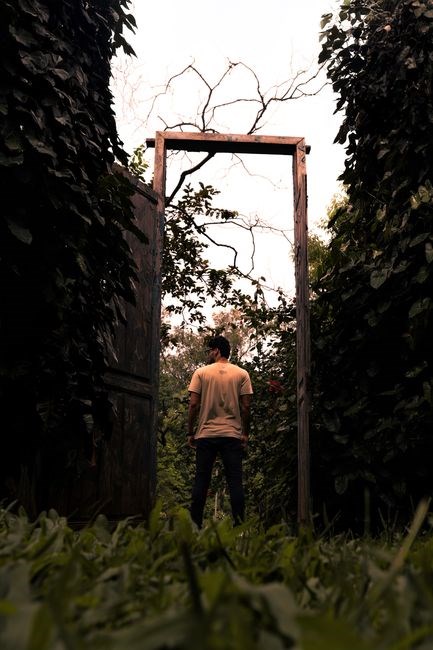
Third, mastering the new skill set, which demands disciplined practice and strategic application, becomes essential to gain respect and protect allies.
Fourth, the political landscape is fraught with intrigue; alliances with rulers, advisers, and rival factions require careful negotiation to avoid betrayal.
Fifth, the protagonist must confront personal doubts and fears, often manifested as internal monologues that question purpose and identity.
Finally, the looming threat of hostile forces—be they tyrannical leaders or hostile creatures—demands constant vigilance and the cultivation of a reliable support network.
Each challenge, when met, transforms the misfit into a hero whose journey inspires others in the realm.
The hero’s evolution is not merely personal; it reshapes the socio‑political fabric. By confronting, and exposing injustices, he demonstrates that power can be wielded for collective uplift. His actions ripple through villages, guilds, and courts, inspiring a generation to question destiny and embrace agency. In the end, the misfit becomes a beacon, proving that even the most unlikely adventurer can redefine the world’s narrative!!..
The Healing Skill: Misbehaving Inversion Extreme Explained
In the narrative, the protagonist acquires a unique ability known as “Misbehaving Inversion Extreme.” This skill is a twisted form of healing magic that, instead of simply restoring health, reverses the conventional flow of restorative energy. By inverting the healing process, the spell can temporarily drain vitality from a target and redirect it toward the caster or an ally, effectively turning a wound into a source of power. The mechanic hinges on the concept of inversion: the caster’s own life force is momentarily siphoned to fuel the healing, creating a risk–reward dynamic that demands careful timing and situational awareness. When the spell is cast, a subtle aura of inverted energy surrounds the caster, and the target’s wounds appear to “un‑heal,” a visual cue that the damage is being re‑channeled. This inversion is not merely a visual trick; it fundamentally alters the battlefield by allowing the caster to heal allies while simultaneously weakening enemies, thereby shifting the balance of power. The skill’s name, “Misbehaving Inversion Extreme,” reflects its chaotic nature—unpredictable outcomes, potential backlash, and the necessity for the caster to manage their own health reserves. In the story, mastering this skill becomes a pivotal moment, as the protagonist learns to balance the dual nature of the spell, using it to protect companions, counteract hostile forces, very. The ability also ties into the narrative’s larger theme of transformation, illustrating how a seemingly negative or “misbehaving” power can be harnessed for good when wielded responsibly and strategically.
Encroachment Wave: Ominous Magic and Its Effects
Encroachment Wave is a dark surge that spreads through the parallel realm, draining and corrupting magic. Originating from the Misbehaving Inversion Extreme skill, the wave is a backlash released when the caster overuses the inversion, turning healing into a siphoning force. When it touches a target, the creature’s aura is stripped, leaving it vulnerable and unable to cast spells for a short duration. Repeated exposure can permanently erase a mage’s abilities, effectively “killing” their skill set. In the story, Masamune accidentally unleashes the wave after a failed healing attempt, flooding the battlefield with violet mist that clings to the ground and echoes for hours. The wave’s ominous presence forces the hero to balance the benefits of healing against the danger of spreading corruption. Players must contain its spread with terrain, barriers, and allies’ abilities, while seeking ways to neutralize its source. The climax sees Masamune sacrifice part of his life force to absorb the wave, restoring balance and saving his companions, but leaving him weakened and hinting at future trials where the wave may return in stronger forms, challenging the limits of his newfound power. The wave’s influence expands beyond the battlefield, infiltrating political arenas and threatening the realm’s stability. Masamune must master containment while navigating complex social dynamics that arise when a corrupting force threatens society. The lingering aftereffects of the wave can leave entire regions desolate, forcing survivors to rebuild their communities with limited resources, while the political fallout creates factions that either seek to harness the wave or eradicate it entirely. These tensions test Masamune’s resolve as he balances sacrifice with good!

The Role of the White Cat Tribe and Demon Allies
In the NEETs Guide to a Parallel World, the White Cat Tribe emerges as a mystical faction that thrives on agility, stealth, and a deep affinity for feline lore. Their members, often seen with silver whiskers and luminous eyes, act as scouts and messengers, weaving through the dense forests and ruined cities to relay critical information to Masamune. They possess a unique deep ability to sense magical lingering disturbances, and allowing them to detect the traces of the Encroachment Wave before it spreads! The tribe’s leadership, led by the enigmatic Cat‑King, negotiates alliances with other factions, ensuring that tribe’s knowledge remains a valuable asset in the political arena. Their rituals chant ancient cat‑mantras that shield allies from corruptive magic, a skill indispensable during demon incursions threatening the realm’s stability. Demon allies, on the other hand, are not the typical malevolent beings one might expect. In this narrative, demons are reimagined as former guardians who fell into darkness after the world’s cataclysmic shift. They possess powerful elemental abilities, ranging from fire‑breathing to shadow manipulation, with Masamune. These pacts grant him temporary access to their formidable powers, but require strict adherence to a code of honor that balances the demon’s innate aggression with Masamune’s healing intent. The partnership between the White Cat Tribe and demon allies is forged through shared goals: protecting the realm from the Encroachment Wave, restoring corrupted lands, and ensuring that the NEET protagonist’s newfound purpose does not become a source of chaos. This dynamic relationship highlights the narrative’s core theme that even the most unlikely allies can unite to overcome overwhelming odds.
Political Dynamics: Rulers, Advisers, and Rebellion in the New World
In the NEETs Guide to a Parallel World, the political landscape is shaped by a fractured monarchy, a council of advisers, and an undercurrent of rebellion. The ruler, King Alaric, is a reluctant sovereign who inherited a realm fractured by the Encroachment Wave. His court is populated with advisers who wield influence through knowledge of ancient spells and political intrigue. Among them, Lady Mirena, a former scholar, advises on diplomatic strategy, while General Voss commands the army, balancing loyalty with the need for reform. The new world’s political dynamics are further complicated by the presence of the White Cat Tribe and demon allies, whose alliances shift the balance of power. Rebellion movements, led by charismatic figures such as the exiled prince, challenge the king’s authority, demanding a redistribution of resources and a reevaluation of the nation’s moral compass. Masamune, the NEET protagonist, becomes a pivotal figure as his healing skill and mischief inversion extreme attract both supporters and detractors. His presence forces advisers to reconsider traditional hierarchies, while rebels see him as a symbol of hope. The tension between the ruler’s desire for stability and the advisers’ push for progressive change creates a dynamic narrative of power, loyalty, and transformation. As the story unfolds, the interplay of these forces determines the fate of the realm, illustrating how a single individual can catalyze political evolution in a world on the brink of collapse. Councils exchange coded scrolls, revealing histories that shape policy, while rebels forge alliances with marginalized tribes, coalition very big that threatens established order.