Bosch Oven Operating Instructions: A Comprehensive Guide
Welcome! This guide details the operation of your Bosch oven, ensuring optimal performance and longevity. Explore features for delightful cooking experiences, safely and efficiently.
Congratulations on choosing a Bosch oven! You’ve invested in a high-quality appliance designed for precision, reliability, and culinary versatility. This oven isn’t just a cooking tool; it’s a partner in creating memorable meals for you and your family.
Bosch ovens are renowned for their innovative technology and user-friendly design. Whether you’re a seasoned chef or a beginner cook, you’ll quickly appreciate the intuitive controls and consistent results this oven delivers. From simple weeknight dinners to elaborate weekend feasts, your Bosch oven is equipped to handle any culinary challenge.
This guide will walk you through every aspect of your oven’s operation, from initial setup and understanding the various cooking modes to utilizing advanced features and troubleshooting common issues. We aim to empower you to unlock the full potential of your appliance and enjoy years of successful cooking.
Safety Precautions
Prioritizing safety is crucial when operating your Bosch oven. Always exercise caution to prevent injury or damage to the appliance. Read these precautions carefully before first use and keep this guide readily available for future reference.
Never operate the oven with a damaged cord or plug. If the supply cord is damaged, it must be replaced by the manufacturer, its service agent, or similarly qualified persons. Avoid using extension cords, as they can overheat. Ensure adequate ventilation around the oven during operation to prevent overheating.
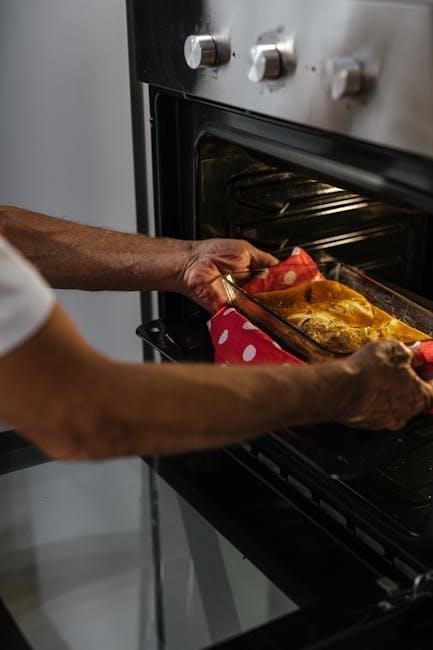
The oven surfaces become extremely hot during and after use. Use oven mitts or pot holders when handling hot cookware. Keep flammable materials away from the oven; Supervise children when they are near the oven. Disconnect the oven from the power supply before cleaning or performing maintenance.
General Safety Warnings
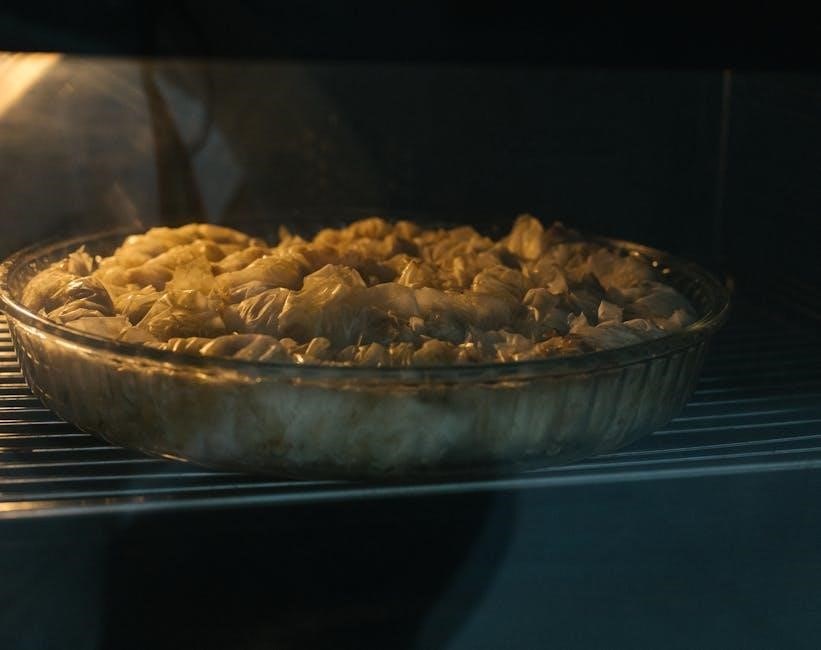
Important safety guidelines are essential for the safe operation of your Bosch oven. Never attempt to repair the oven yourself; contact authorized service personnel for any repairs. Do not modify the oven in any way, as this could create a safety hazard.
Always ensure the oven is properly installed and grounded according to local regulations. Do not use abrasive cleaners or scouring pads, as they can damage the oven surfaces. Be cautious when opening the oven door, as hot steam may escape. Avoid placing heavy objects on the oven door.
Never use the oven as a storage space. Regularly inspect the oven for any signs of damage. If you smell gas, immediately shut off the gas supply and contact your gas company. Keep the oven area clean and free of clutter. Follow all cooking instructions carefully.
Electrical Safety
Prioritize electrical safety when using your Bosch oven. Ensure the oven is connected to a properly grounded electrical outlet that matches the voltage specified on the appliance rating plate. Never use extension cords or adapters, as they can overheat and pose a fire risk.
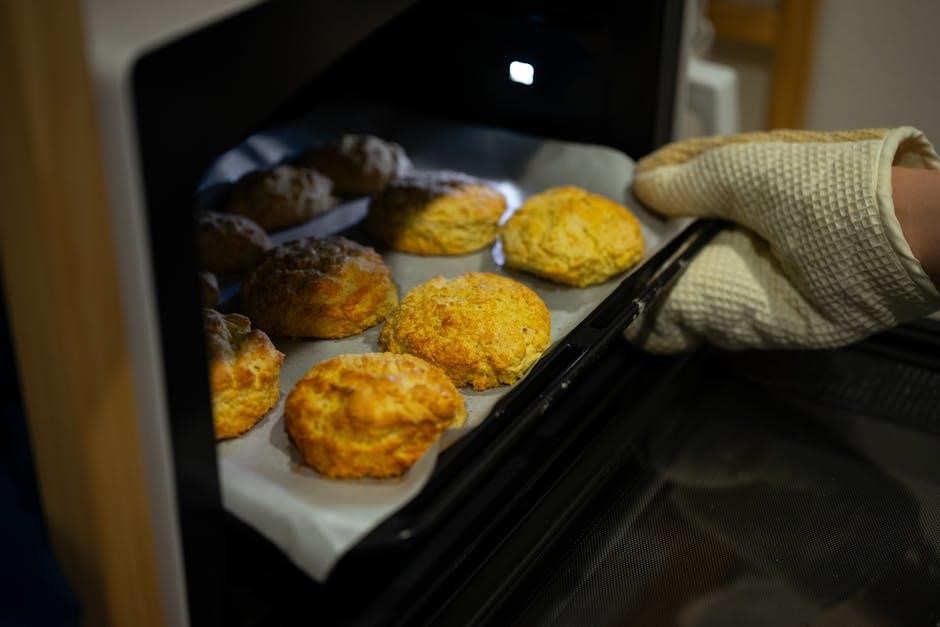
Do not operate the oven with a damaged power cord or plug. If the power cord is damaged, it must be replaced by a qualified technician. Avoid touching the oven’s electrical components with wet hands. Disconnect the oven from the power supply before cleaning or performing any maintenance.
In the event of an electrical short circuit, immediately switch off the oven and disconnect it from the power supply. Do not attempt to repair electrical components yourself; contact authorized service personnel. Regularly check the electrical connection for any signs of wear or damage.
Oven Components & Features
Familiarize yourself with the key components of your Bosch oven for optimal use. The control panel manages all oven functions, offering intuitive settings. Inside, the oven cavity accommodates various rack positions for flexible cooking. The interior lighting provides clear visibility during operation.
Oven racks are designed to hold baking sheets, roasting pans, and other cookware. Some models feature a warming drawer for keeping dishes at serving temperature. Explore the door hinges, often equipped with a soft-close mechanism for gentle operation. The ventilation system ensures efficient heat distribution and prevents condensation.
Understanding these features will enhance your cooking experience. Refer to the detailed sections for specific instructions on each component and its function;
Control Panel Overview
The Bosch oven control panel is designed for intuitive operation. A central display screen shows temperature, time, and selected oven mode. Touch controls or rotary dials allow you to adjust settings easily. Dedicated buttons activate functions like broiling, convection, and self-cleaning.
Temperature controls let you precisely set the desired cooking temperature. The timer function enables you to program cooking durations. Preset programs offer convenient settings for common dishes. A start/stop button initiates or cancels oven operation. Some models include a favorites function for saving custom settings.
Familiarize yourself with the layout and symbols on the control panel. Refer to the accompanying diagrams for a visual guide to each button and function.
Interior Lighting & Racks
The Bosch oven’s interior lighting illuminates the cavity, allowing clear visibility of your cooking progress without opening the door. This feature conserves heat and energy. The light typically activates automatically when the oven is in operation, or can be switched on manually via the control panel.
Oven racks are designed to accommodate various cookware sizes and shapes. Most Bosch ovens include multiple racks, often with telescopic rails for smoother sliding and improved stability. Adjust rack positions to optimize cooking results based on your recipe. Ensure racks are securely placed in the designated guides before loading food.
Avoid placing aluminum foil directly on the oven floor, as it can damage the enamel coating. Always use appropriate cookware and oven-safe accessories.
Initial Setup & First Use
Before your first culinary adventure with your new Bosch oven, a few essential steps are required. This ensures optimal performance and a long lifespan for your appliance. Begin by carefully reviewing all included documentation, including the safety instructions and warranty information.
Proper placement is key. Ensure the oven is level to guarantee even cooking. Adjust the feet if necessary. Connect the oven to a properly grounded electrical outlet, adhering to local electrical codes. Once connected, familiarize yourself with the control panel and its various functions.
A preliminary run without food helps burn off any manufacturing residues. Set the oven to a moderate temperature (around 350°F/175°C) for approximately 30-60 minutes.
Removing Packaging & Transport Securings
Carefully unpack your Bosch oven, inspecting for any visible damage incurred during shipping. Retain the packaging materials for potential future transport or warranty claims. Begin by removing all exterior packaging, including cardboard, plastic wrap, and protective foam.
Crucially, locate and remove all transport securing materials. These are designed to prevent internal component movement during transit and must be removed before operation. Typically, these include screws or brackets securing the oven cavity or door. Consult the separate ‘Installation Guide’ for specific locations and removal instructions for your model.
Check the interior for any packing materials left behind, such as polystyrene or cardboard pieces. Ensure all accessories, like racks and baking trays, are present and free from protective coverings.
Initial Cleaning Procedure
Before first use, a thorough cleaning is essential to remove any manufacturing residues or dust. Use a mild detergent solution – warm water mixed with a small amount of dish soap – and a soft cloth or sponge. Avoid abrasive cleaners, scouring pads, or harsh chemicals, as these can damage the oven’s surfaces.
Clean the interior, including the oven cavity, door, and glass panel. Pay particular attention to any areas with visible residue. Rinse thoroughly with clean water and dry with a soft cloth. For stainless steel surfaces, use a stainless steel cleaner to prevent streaks and maintain shine.
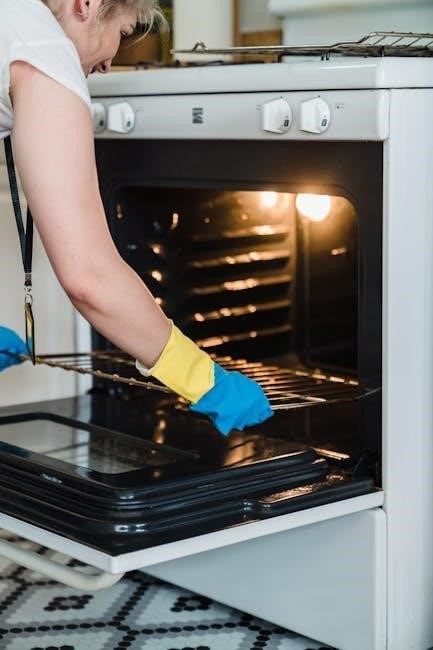
Remove and wash the racks and baking trays separately with warm, soapy water. Ensure they are completely dry before placing them back into the oven. A final wipe-down of the exterior will complete the initial cleaning process, preparing your Bosch oven for its first culinary adventure.
Understanding Oven Modes
Bosch ovens offer a variety of modes designed for diverse cooking needs. Familiarizing yourself with these will unlock the oven’s full potential. Conventional Heating utilizes top and bottom elements, ideal for traditional baking and roasting, providing even heat distribution.
Fan Convection adds a fan to circulate hot air, resulting in faster and more uniform cooking – perfect for multiple racks or achieving crispy results. Broiling & Grilling uses intense top heat for searing, browning, and quick cooking of foods placed close to the element.
Other modes, like Pizza Setting or Bread Baking, are optimized for specific dishes. Consult your oven’s full manual for a complete list and detailed explanations of each mode’s functionality and recommended uses; Experiment to discover which mode best suits your recipes!
Conventional Heating
Conventional Heating is the most traditional oven mode, employing heat from the top and bottom heating elements. This method is excellent for baking cakes, pastries, and casseroles where gentle, even heat is crucial for consistent results. It’s also well-suited for roasting meats and vegetables, though cooking times may be slightly longer compared to convection modes.

When using Conventional Heating, position your dishes in the middle of the oven for optimal heat circulation. Avoid overcrowding the oven, as this can hinder airflow and lead to uneven cooking. Preheating is recommended for best results, ensuring the oven reaches the desired temperature before adding food.
For delicate items, consider using a lower temperature and extending the cooking time. This prevents burning and ensures a perfectly baked product. Remember to always monitor your food and adjust cooking times as needed.
Fan Convection
Fan Convection utilizes a heating element combined with a fan to circulate hot air evenly throughout the oven cavity. This results in faster cooking times and more uniform browning, making it ideal for roasting, baking multiple trays of cookies, or cooking larger meals. The circulating air seals in moisture, leading to juicier meats and crispier vegetables.
When using Fan Convection, you may need to reduce the temperature by approximately 20°F (10°C) compared to conventional heating, as the circulating air cooks food more efficiently. Position dishes on the middle rack for best results, but you can utilize multiple racks simultaneously for increased capacity.
Avoid opening the oven door frequently during convection cooking, as this can disrupt the airflow and affect cooking times. This mode is particularly effective for achieving golden-brown crusts and perfectly cooked dishes.
Broiling & Grilling
Broiling and Grilling utilize intense, direct heat from an upper heating element to quickly cook food. These functions are excellent for browning, searing, and finishing dishes. Note that Bosch ovens may use the terms “Broil” and “Grill” interchangeably, referring to the same heating method.
Always use broil-safe cookware, such as metal or oven-safe glass. Position the oven rack closer to the heating element for more intense heat and faster cooking, or further away for gentler browning. Monitor food closely during broiling, as it can burn quickly.
For best results, leave the oven door slightly ajar during broiling to prevent overheating and ensure proper ventilation. Avoid using this function for delicate items or foods with high sugar content, as they are prone to burning. Remember to turn food halfway through the cooking process for even browning.
Setting the Oven: Basic Operations
Initiating oven operation begins with selecting your desired mode using the control panel. Once chosen, the temperature can be adjusted using the “+” and “-” buttons, or by directly inputting the value via the touchscreen (depending on your model). Confirm your temperature selection.
Next, set the cooking time. Similar to temperature, you can increment/decrement the time or directly enter it. Press “Start” to begin the preheating process. The display will indicate when the oven has reached the set temperature, often with a beep or visual cue.
Remember to always allow for preheating time for accurate cooking results. Some models offer “Rapid Preheat” for faster heating. After preheating, your food is ready to be placed inside. Always use oven mitts when handling hot cookware!
Setting Temperature & Time
Precisely controlling temperature and time is crucial for successful baking and roasting. Begin by pressing the temperature control buttons – typically “+” and “-” – to achieve your desired degree setting; Digital displays clearly show the selected temperature. For precise input, some Bosch ovens allow direct temperature entry via a touchscreen interface.
Time setting follows a similar process. Use the time control buttons to increase or decrease the cooking duration. Again, direct entry may be available on touchscreen models. Confirm both temperature and time before initiating the cooking process.
Pay attention to the unit displayed (Celsius or Fahrenheit) and adjust settings accordingly. The oven will automatically begin preheating once “Start” is pressed, displaying the progress on the screen.
Using the Timer Function
The timer function on your Bosch oven is incredibly versatile, serving as both a countdown timer and a shut-off mechanism. To set a timer without automatically starting the oven, press the “Timer” button. Use the “+” and “-” buttons to input the desired duration. Press “Start” to activate the timer; it will count down independently.
To set a timer in conjunction with cooking, first set the temperature and time as usual, then press “Start.” You can then activate the timer function to automatically switch off the oven when the set time elapses. This prevents overcooking!
An audible alarm will sound when the timer reaches zero. Press any button to silence it. Remember to reset the timer after each use.
Advanced Oven Features
Bosch ovens boast several advanced features designed to simplify cooking and maintenance. Pyrolytic cleaning, available on select models, utilizes high temperatures to incinerate food residue, leaving only a light ash to wipe away – eliminating the need for harsh chemicals or scrubbing. Refer to the ‘Pyrolytic Cleaning’ section for detailed instructions and safety precautions.
The SoftClose door function ensures a gentle and controlled closing motion, preventing slamming and potential damage. This feature enhances safety, especially in households with children. Additionally, explore features like moisture plus for achieving optimal bread baking results and temperature probe for precise cooking of meats.
Pyrolytic Cleaning (Self-Cleaning)
Pyrolytic cleaning is a high-temperature self-cleaning cycle that converts food residue into ash. Before starting, remove all racks, baking stones, and any cookware from the oven cavity. Ensure the oven door can lock securely. Select the pyrolytic cleaning program via the control panel – cycle duration varies based on soil level.
During the cycle, the oven door will automatically lock and the oven will heat to extremely high temperatures. Avoid opening the door during operation. A noticeable odor may be present; ensure adequate ventilation. Once complete, the oven will cool, and the door will unlock. Simply wipe away the remaining ash with a damp cloth. Caution: Do not use water or cleaning agents during the pyrolytic cycle.
SoftClose Door Function
Bosch ovens feature a SoftClose door mechanism designed for gentle and controlled closing. This prevents slamming and potential damage to the oven or surrounding cabinetry. The door utilizes a damping system that slows its descent during the final few inches of closure.
To operate, simply allow the door to swing freely; the SoftClose function will engage automatically. Do not attempt to force the door closed or resist the damping action. If the door doesn’t close completely, gently assist it – avoid excessive force. Regular cleaning around the door hinges ensures smooth operation. This feature enhances safety, reduces noise, and contributes to the overall premium experience of your Bosch oven.
Troubleshooting Common Issues
Encountering problems with your Bosch oven can be frustrating, but many issues are easily resolved. Before contacting service, check these common concerns. If the oven isn’t heating, verify the power supply and ensure the correct cooking mode is selected. Error codes displayed on the control panel indicate specific problems – consult the dedicated section for interpretations.
Uneven baking often stems from improper rack placement or overloading the oven. Food burning might indicate an incorrect temperature setting or extended cooking time. Always refer to your recipe and adjust accordingly. For persistent issues, note the error code (if any) and model number when contacting Bosch customer support for efficient assistance.
Oven Not Heating
If your Bosch oven fails to heat, begin with simple checks. First, confirm the oven is properly plugged into a functioning power outlet. Test the outlet with another appliance to verify power delivery. Next, ensure the control panel is not displaying an error code, as this indicates a specific fault requiring attention. Verify the selected cooking mode is appropriate for heating – some modes, like ‘Keep Warm,’ don’t generate significant heat.
Check that the oven door is fully closed; a safety mechanism prevents operation if the door is ajar. If the issue persists, examine the circuit breaker or fuse box to rule out a tripped breaker or blown fuse; For models with a child lock, ensure it’s deactivated. If none of these steps resolve the problem, contact Bosch customer support.
Error Codes & Their Meanings
Bosch ovens utilize error codes to diagnose internal issues. E001 typically indicates a temperature sensor fault, requiring professional service. E002 suggests a heating element malfunction – the element may need replacement. E003 often points to a problem with the oven’s control module. E004 signals an issue with the door lock mechanism, potentially preventing operation.

Codes starting with ‘F’ generally relate to communication errors within the oven’s system. For example, F100 might indicate a problem with the display. Consult your oven’s specific model manual for a complete list of error codes and their corresponding solutions. Attempting to repair the oven yourself based solely on error code information is discouraged; always contact a qualified technician for complex issues.