Fundamentals of Cost Accounting‚ a crucial resource‚ develops skills for both classroom learning and practical application․ It presents cost accounting as a direct response to informed
decision-making processes․
This cost accounting introduction‚ available as a PDF‚ defines key terms and explores its relationship to broader accounting disciplines‚ like accountancy and book-keeping․
The material is presented from both the preparer’s and user’s perspectives‚ benefiting accounting majors and those pursuing other career paths․ ISBN 9781264927289․
Defining Cost Accounting
Cost accounting‚ fundamentally‚ is a branch of accounting focused on meticulously tracking‚ analyzing‚ and reporting costs․ It’s more than just recording expenses; it’s about understanding why those costs occur and how they impact a business’s profitability․ A readily available cost accounting PDF often begins with this core definition․
Unlike financial accounting‚ which primarily focuses on external reporting‚ cost accounting is largely internal․ It provides managers with the detailed cost information needed to make informed decisions regarding pricing‚ production‚ and overall operational efficiency․ This detailed analysis extends beyond simple expense tracking․
The introductory materials‚ often found in a cost accounting textbook or PDF‚ emphasize that costing involves classifying costs – direct versus indirect – and assigning them to products‚ services‚ or activities․ This process allows businesses to accurately determine the true cost of their offerings․ It’s a critical component of effective management accounting‚ providing insights into resource allocation and performance evaluation․ Understanding these definitions is foundational to mastering the subject․

Relationship to Financial and Management Accounting
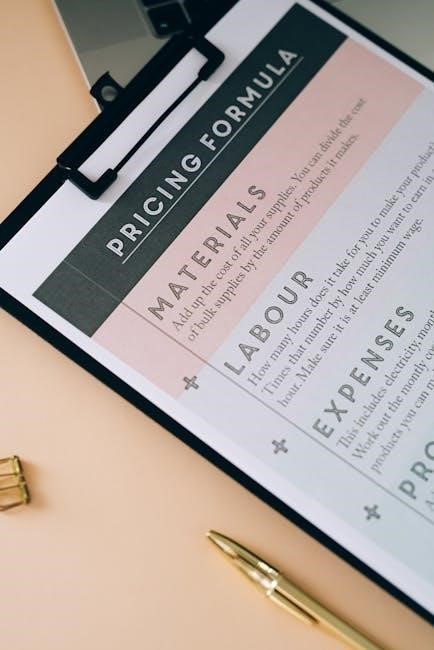
Cost accounting serves as a vital bridge between financial accounting and management accounting․ While financial accounting focuses on standardized reporting for external stakeholders – investors‚ creditors‚ and regulators – cost accounting provides the detailed internal information needed for managerial decision-making․ A comprehensive cost accounting PDF will illustrate this interconnectedness․
Financial accounting relies on the summarized cost data generated by cost accounting systems to prepare income statements and balance sheets․ However‚ management accounting leverages the granular cost information for budgeting‚ performance evaluation‚ and strategic planning․ It’s a deeper dive beyond the externally reported figures․
Essentially‚ cost accounting feeds data into both financial and management accounting․ It’s a foundational element‚ providing the raw material for both external compliance and internal control․ Studying a cost accounting resource‚ like a textbook or PDF‚ reveals how these disciplines overlap and support each other within an organization’s overall accounting framework․
The Role of Cost Accounting in Decision Making
Cost accounting is fundamentally about providing information for effective decision-making within an organization․ A detailed cost accounting PDF will demonstrate how it moves beyond simply tracking expenses to actively informing strategic choices․ This includes pricing decisions‚ product mix optimization‚ and make-or-buy analyses․
By accurately determining the cost of products and services‚ businesses can set competitive prices while maintaining profitability․ Cost accounting helps managers understand the impact of various factors – like materials‚ labor‚ and overhead – on overall costs․ This insight is crucial for resource allocation and cost control․
Furthermore‚ it supports capital budgeting decisions‚ evaluating the financial viability of new investments․ The “Fundamentals of Cost Accounting” emphasizes this procedural approach‚ showing how tools and techniques naturally arise from the need to make informed choices․ Accessing a PDF version allows for focused study of these critical applications․

Core Concepts in Cost Accounting
A comprehensive cost accounting PDF details essential concepts like direct and indirect costs‚ fixed versus variable expenses‚ and the application of job order and process costing methods․
Cost Terminology: Direct vs․ Indirect Costs
Understanding the distinction between direct and indirect costs is foundational in cost accounting‚ as detailed in many cost accounting PDF resources․ Direct costs are those easily traceable to a specific cost object – a product‚ service‚ or department․ Examples include raw materials and direct labor directly used in production․
Conversely‚ indirect costs‚ also known as overhead‚ cannot be easily traced to a specific cost object․ These costs benefit multiple cost objects simultaneously․ Examples include factory rent‚ utilities‚ and supervisory salaries․ Allocating these indirect costs requires careful consideration and often utilizes cost allocation bases․
A cost accounting PDF will often illustrate this with examples․ Accurate classification is vital for precise cost calculation and informed decision-making․ Misclassifying costs can lead to inaccurate product costing and flawed profitability analysis․ Therefore‚ a thorough understanding of these terms is paramount for effective cost accounting practices․
Cost Classification: Fixed‚ Variable‚ and Mixed Costs
Cost accounting PDF materials consistently emphasize classifying costs as fixed‚ variable‚ or mixed․ Fixed costs remain constant in total‚ regardless of production volume‚ such as rent or insurance․ These costs are incurred even with zero production․ Conversely‚ variable costs change directly with production levels; examples include direct materials and piece-rate labor․
Mixed costs‚ also called semi-variable costs‚ possess both fixed and variable components․ A common example is utility bills‚ which have a fixed monthly charge plus a variable charge based on usage․ Separating these components is crucial for accurate cost analysis․
Understanding these classifications is vital for cost-volume-profit (CVP) analysis and break-even point calculations‚ frequently covered in cost accounting textbooks and PDF guides․ Correctly identifying cost behavior allows for better budgeting‚ forecasting‚ and pricing decisions‚ ultimately improving profitability․
Costing Methods: Job Order and Process Costing
Cost accounting PDF resources detail two primary costing methods: job order costing and process costing․ Job order costing tracks costs for individual‚ unique projects or “jobs․” This method is ideal for customized products or services‚ like construction or specialized manufacturing‚ where each job differs․
Costs are accumulated for each job‚ including direct materials‚ direct labor‚ and allocated overhead․ Conversely‚ process costing is used when producing large volumes of identical or similar products‚ such as chemicals or food processing․ Costs are tracked through each production process or department․
The cost accounting approach focuses on averaging costs across all units produced․ Selecting the appropriate method depends on the nature of the product and the production process‚ as explained in comprehensive cost accounting guides available in PDF format․ Both methods aim to accurately determine the cost of goods sold․

Cost Behavior Analysis
Cost accounting PDF materials explore how costs react to changes in activity levels․ Understanding relevant range‚ the high-low method‚ and CVP analysis are crucial for effective decision-making․
Understanding Relevant Range
The relevant range‚ a core concept within cost accounting PDF resources‚ defines the activity level where cost behavior patterns remain consistent․ Outside this range‚ costs may behave unpredictably‚ rendering traditional analysis unreliable․
For instance‚ a fixed cost like rent remains constant within a specific production volume․ However‚ exceeding capacity might necessitate expanding facilities‚ increasing rent – thus altering the cost behavior․ Similarly‚ discounts on materials might apply only above a certain purchase quantity․
Identifying the relevant range is vital for accurate cost estimations and profitability projections․ Cost accounting materials emphasize that extrapolating cost data beyond this range can lead to flawed conclusions․ Managers must carefully assess operational boundaries when utilizing cost information for strategic decisions․
Analyzing costs within the relevant range provides a realistic view of how expenses will change with activity‚ supporting informed budgeting and performance evaluation․ Ignoring this concept can result in inaccurate forecasts and poor resource allocation․
High-Low Method for Cost Estimation
The High-Low method‚ detailed in many cost accounting PDF guides‚ is a straightforward technique for estimating fixed and variable cost components․ It utilizes only two data points – the highest and lowest activity levels – to calculate a preliminary cost equation․
This method simplifies the process by assuming a linear relationship between cost and activity․ The slope of the line connecting the high and low points represents the variable cost per unit‚ while the fixed cost is determined by plugging one of the points into the equation․
While easy to implement‚ the High-Low method has limitations․ It’s sensitive to outliers and may not accurately reflect cost behavior if the high and low activity levels aren’t representative of the overall data․ More sophisticated techniques‚ like regression analysis‚ offer greater precision․
Despite its simplicity‚ the High-Low method provides a quick and useful initial estimate‚ particularly when detailed data is limited․ It’s a foundational concept in understanding cost behavior and forms a basis for more advanced cost accounting analyses․
Contribution Margin and Cost-Volume-Profit (CVP) Analysis

Cost-Volume-Profit (CVP) analysis‚ extensively covered in cost accounting PDF resources‚ examines the relationship between changes in costs and volume‚ and their impact on profit․ A core component is the contribution margin – the difference between sales revenue and variable costs․
Understanding the contribution margin is vital for determining the break-even point‚ the sales level where total revenue equals total costs․ CVP analysis helps managers assess the profitability of different products or services and make informed decisions about pricing and production levels․
Key calculations include the break-even point in units and dollars‚ as well as the margin of safety‚ which indicates how much sales can decline before incurring a loss․ These tools are invaluable for budgeting‚ forecasting‚ and strategic planning․
Many cost accounting texts emphasize that CVP analysis relies on several assumptions‚ including constant selling prices‚ fixed costs‚ and a linear relationship between cost and volume․ Despite these limitations‚ it remains a powerful analytical framework․

Cost Accounting Systems and Techniques
Cost accounting PDF materials detail systems like job order costing and process costing‚ alongside advanced techniques such as Activity-Based Costing (ABC)․
These methods accurately track and allocate costs‚ providing crucial insights for managerial decision-making and performance evaluation․
Job Order Costing System Details
Job order costing‚ detailed within cost accounting PDF resources‚ meticulously tracks costs associated with individual‚ unique projects or “jobs․” This system is ideal for businesses offering customized products or services – think construction‚ printing‚ or specialized manufacturing․
Each job receives a unique identification number‚ and costs—direct materials‚ direct labor‚ and manufacturing overhead—are accumulated separately for that specific job․ Direct materials are the raw materials directly traceable to the job‚ while direct labor represents the wages of workers directly involved in the job’s completion․
Manufacturing overhead encompasses all other costs‚ allocated to jobs using a predetermined overhead rate․ This rate‚ calculated based on estimated overhead costs and a chosen allocation base (like direct labor hours)‚ ensures accurate cost assignment․ As the job progresses‚ costs are recorded on a job cost sheet․ Upon completion‚ the total cost is calculated‚ and the finished product is transferred to finished goods inventory‚ awaiting sale․ This detailed tracking provides precise cost information for each job‚ aiding in pricing decisions and profitability analysis․
Process Costing System Details
Process costing‚ explored in comprehensive cost accounting PDF materials‚ is employed when producing large volumes of homogeneous products – think chemicals‚ food processing‚ or textiles․ Unlike job order costing‚ costs aren’t tracked by individual jobs‚ but rather accumulated for each processing department or stage․
Costs—direct materials‚ direct labor‚ and manufacturing overhead—are summarized for each department over a specific period․ The total cost is then divided by the equivalent units produced to determine the cost per equivalent unit․ Equivalent units represent the amount of work completed on partially completed units in ending work-in-process inventory․
This method simplifies cost allocation as all units are assumed to be identical․ Key steps include tracking costs by department‚ calculating equivalent units‚ and assigning costs accordingly․ The resulting cost per equivalent unit is used to value finished goods and work-in-process inventory․ Process costing provides a streamlined approach for mass production environments‚ offering a clear picture of production costs per unit․
Activity-Based Costing (ABC) – An Overview
Activity-Based Costing (ABC)‚ detailed in advanced cost accounting PDF resources‚ represents a refinement over traditional costing methods․ It moves away from simply allocating overhead based on volume-related measures like direct labor hours‚ instead focusing on identifying and assigning costs to specific activities․
ABC recognizes that many overhead costs aren’t driven by production volume but by activities that support production – such as machine setup‚ quality control‚ or materials handling․ These activities consume resources‚ and ABC aims to accurately trace those resource costs to products or services based on their consumption of those activities․
This involves identifying activities‚ assigning costs to those activities‚ and then using cost drivers to allocate activity costs to products․ While more complex to implement than traditional methods‚ ABC provides a more accurate understanding of product costs‚ particularly in environments with diverse product lines and significant overhead․ It aids in better pricing decisions and profitability analysis․

Materials and Labor Costing
Cost accounting PDF materials cover procurement and control‚ ensuring efficient resource management․ Labor costing focuses on allocation and analysis‚ vital for accurate product costing and profitability․
Materials Procurement and Control
Effective materials procurement and control are foundational elements within cost accounting‚ as detailed in numerous PDF resources․ This process begins with identifying reliable suppliers‚ a critical aspect highlighted when considering tenders – assessing past performance regarding quality and timely delivery is paramount․
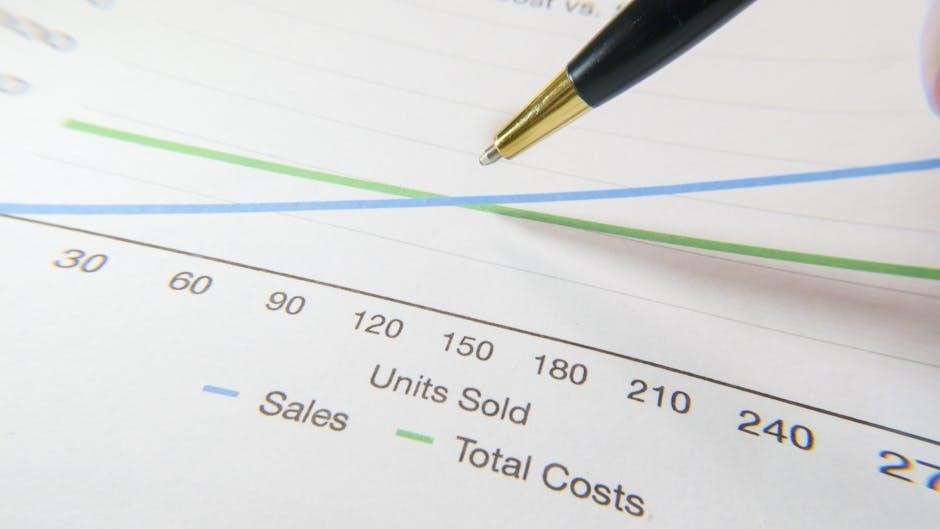
Financial stability and the supplier’s capacity to fulfill orders are also key considerations․ While competitive bidding is standard‚ exceptions exist‚ such as controlled pricing environments‚ long-term contracts‚ or utilizing catalog prices․ Cost-plus contracts represent another scenario where direct quotation isn’t always necessary․

Control extends beyond initial purchase; it encompasses storage‚ safeguarding against waste‚ and efficient material requisitioning․ Accurate tracking of material costs – including purchase price‚ freight‚ and handling – is essential for determining the true cost of goods manufactured․ Cost accounting PDF guides emphasize the importance of minimizing material costs without compromising quality‚ directly impacting profitability․
Labor Cost Allocation and Analysis
Labor cost allocation and analysis‚ comprehensively covered in cost accounting PDF materials‚ involves accurately determining and assigning labor costs to products or services․ This extends beyond simply tracking wages; it includes benefits‚ payroll taxes‚ and other labor-related expenses․
Effective allocation requires understanding different labor types – direct labor (directly traceable to production) and indirect labor (supporting production)․ Analyzing labor efficiency is crucial; comparing actual labor hours to standard hours helps identify variances and areas for improvement․
Cost accounting systems utilize various methods for allocating indirect labor‚ such as activity-based costing‚ which assigns costs based on the activities that drive them․ Detailed PDF guides emphasize the importance of accurate timekeeping and labor reporting to ensure reliable cost data․ Proper analysis enables informed decisions regarding staffing levels‚ training‚ and process optimization‚ ultimately impacting profitability․